
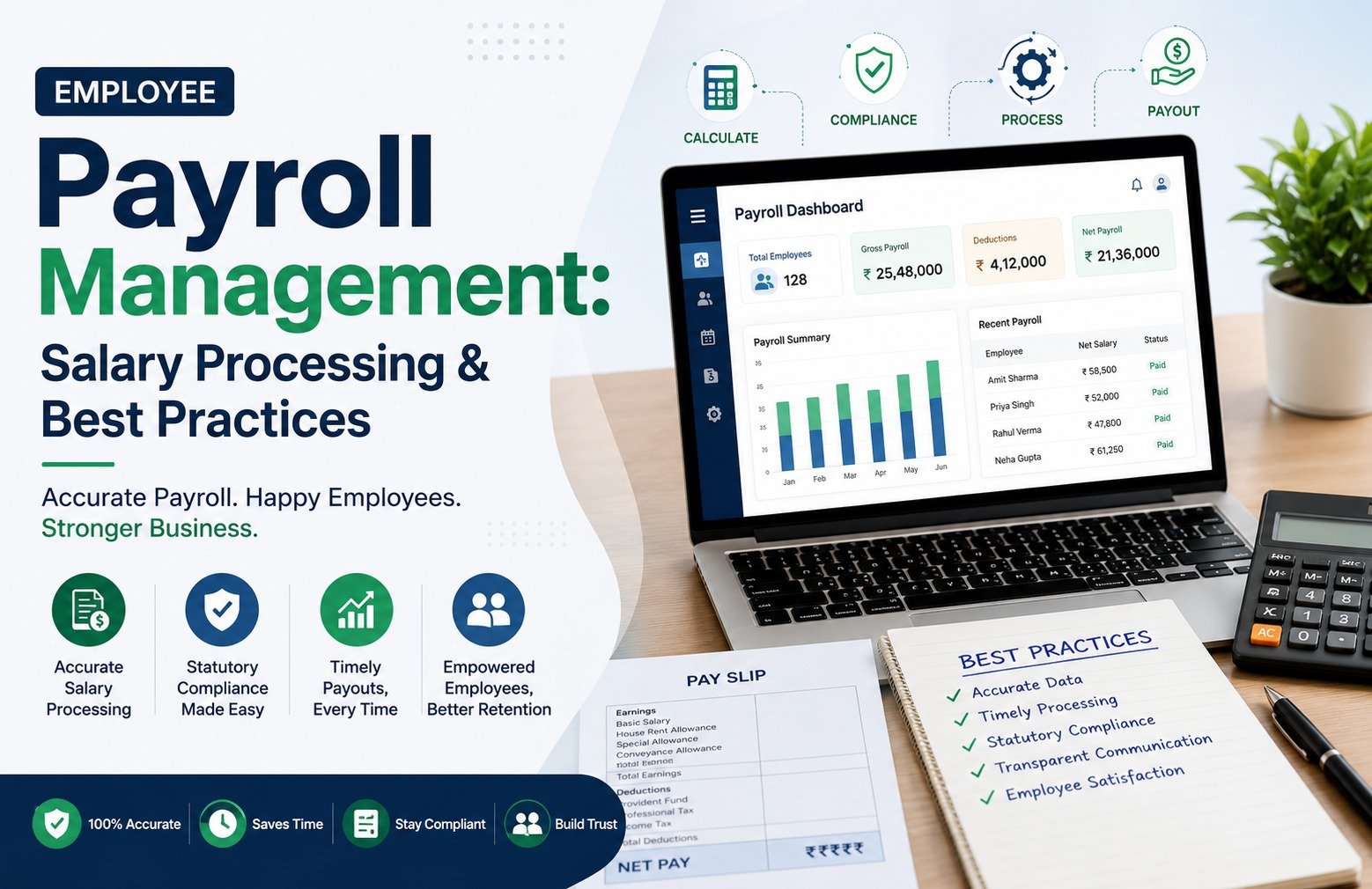
Imagine working hard throughout the entire month, only to discover that your salary is delayed, incorrect, or short due to a tax miscalculation. This creates unnecessary stress and frustration that extends far beyond just money — it's a fundamental breach of trust between employer and employee.
Most organizations view payroll as a simple back-office task, but in reality, it is the financial backbone of any organization. When managed correctly, reliable payroll management keeps your team motivated, focused, and secure. Errors in this critical area can lead to serious legal consequences, a decline in employee morale, and lasting damage to your organization's reputation.
Mismanaged payroll isn't just inconvenient—it's expensive. Late tax filings can trigger penalties, misclassified workers create tax liabilities, and delayed payments erode trust. A single error can compound across multiple cycles, creating compliance nightmares.
Understanding Payroll Fundamentals
Why Payroll Matters Beyond the Numbers
Payroll management is far more than just calculating and distributing wages. It involves calculating total earnings, applying correct deductions, and distributing payments to employees on time. It includes timely filing of payroll taxes with relevant authorities and ensures you balance two critical priorities: employee satisfaction and legal compliance.
Your employees have financial responsibilities like rent, bills, and groceries. When payroll is handled on time and clearly communicated, it tells your people that their hard work is valued. This builds the foundation of trust that drives organizational success.
A simple, detailed payslip that breaks down salary and tax clearly removes tension and builds tremendous trust in the workplace. Transparent payroll processing signals that your organization respects its people.
Compliance: The Non-Negotiable Responsibility
Local, state, and federal governments have strict regulations regarding labour laws and taxation. Filing taxes late or miscategorizing workers can result in heavy fines, back-pay checks, and legal trouble. Compliance isn't optional—it's a legal obligation that protects both your business and your employees.
The Complete Payroll Lifecycle
Three Phases to Smooth Operations
The payroll cycle has three distinct phases: pre-payroll preparation, main payroll processing, and post-payroll work. Understanding each phase is essential for building a reliable system that scales with your business.
Every successful company follows this three-phase methodology. Each phase builds on the previous one, ensuring data accuracy and timely compliance at every step.
Phase 1: Pre-Payroll Data Preparation
Building a Foundation of Accurate Information
The first phase involves gathering all necessary data before payroll processing begins. This stage ensures accurate and complete information is in place. Before you calculate anything, the data must be clean and proper. HR and managers must work together to collect all required data.
Time & Attendance Tracking
Maintain proper records of exact hours worked, overtime, leaves, sick days, and holidays taken by employees. This data forms the foundation for accurate salary calculations and compliance reporting.
Employee Changes & Lifecycle Events
Update records for new employees joining, exit formalities for departing staff, and salary changes or bonus updates. These changes must be documented and communicated clearly.
Deduction Updates & Benefit Changes
Monitor changes in health insurance premiums, retirement contributions, or voluntary savings plans. Keep deduction records current to ensure accurate net pay calculations.
Phase 2: Main Payroll Processing
Where Calculations Happen
Phase 2 is where the actual processing of payroll occurs. All mathematical operations are performed to calculate employee compensation accurately.
Gross Pay Calculation
Calculate gross pay based on the employee contract, which depends on whether the employee is salaried or hourly. This is the starting point for all deductions.
Applying Deductions
Government taxes, provident fund contributions, and personal deductions are removed from the gross salary. Ensure all deductions comply with statutory requirements and employee agreements.
Net Pay Determination
The remaining amount after all deductions is the net pay—the amount that gets deposited directly into the employee's bank account. This is what employees actually receive.
Even small calculation errors in this phase cascade across compliance reporting, tax filings, and employee satisfaction. Automated systems virtually eliminate these risks.
Phase 3: Post-Payroll & Distribution
Payment, Documentation, and Filing
Once approved, the money is distributed to employees through direct deposit, cheque, or digital wallet. Payslips must be generated simultaneously and provided to employees for their records. The company must submit withheld taxes and statutory contributions to government agencies before the deadline.
Payment Distribution
Process payments through the employee's preferred method—direct bank transfer, cheque, or digital wallet. Ensure all payments clear before the payroll date promised to employees.
Payslip Generation & Delivery
Create detailed payslips showing gross pay, all deductions, and net pay. Deliver payslips on time so employees have clear documentation of their earnings.
Tax & Statutory Filing
Submit withheld taxes, provident fund contributions, and other statutory requirements to the government within specified deadlines. Missing deadlines triggers penalties and interest.
Compliance & Labour Laws
Navigating the Regulatory Landscape
Following labour laws and paying taxes correctly is essential for running a proper business. Compliance is the most challenging part of payroll management, especially as regulations keep changing. Companies must continuously monitor labour rules to stay compliant.
Worker Classification: A Matter of Legal Significance
The distinction between a contractor and an employee carries fundamentally different rights, obligations, and liabilities. Some workers may appear to do full-time jobs but are incorrectly classified on paper. Misclassifying full-time workers as independent contractors is a costly mistake.
Government bodies examine how much control you have over work, compensation, and the agreement type. If a worker comes at fixed times, uses your company tools, and works only for you—they are your employee. Misclassification brings heavy tax penalties and unpaid benefit liabilities.
Overtime & Minimum Wage Compliance
Overtime and minimum wage rules protect workers from being underpaid or overworked. Your payroll system should automatically calculate overtime based on local labor rules and flag extra hours worked without manual effort. As per law, hourly employees must receive 1.5x their regular pay for hours worked beyond the standard limit.
You must strictly track changing minimum wage rates across all areas where your remote or hybrid employees live. This is especially important for distributed teams.
Payroll Management Methods: Choose What Works
Three Approaches for Different Business Sizes
You must choose between doing payroll yourself, outsourcing to experts, or using automated software systems. The right choice depends on your business size, budget, and internal expertise.
Manual Spreadsheets Small Teams
Best for very small businesses with fewer than 5 employees and stable monthly salaries. Free but highly prone to human error. A single misplaced decimal cascades into tax calculation errors.
Outsourced Payroll Mid-Size
Ideal for mid-sized businesses who want external experts handling payroll and HR compliance fully. Expensive and reduces direct control, but provides peace of mind and expert oversight.
Automated Software Growing Teams
Best for companies seeking fast, affordable, and scalable solutions. Modern platforms automate calculations, attendance syncing, and tax filings simultaneously.
If your business is already using TallyPrime or an ERP system, adding an automatic payroll tool makes everything exponentially easier. With salary data, staff records, attendance, and tax details in one system, data entry mistakes become virtually impossible.
Payroll Best Practices & Optimization
Simple Steps to Transform Payroll Operations
These straightforward practices will turn your payroll from a monthly tension-filled headache into a smooth, automatic routine that builds employee trust.
Establish a Strict Payroll Calendar
Set clear deadlines for submitting timecards, getting approvals, and processing—all following the same fixed schedule. When employees know timesheets are due by the 25th, it creates accountability and prevents last-minute rushes that compromise accuracy.
Secure Sensitive Payroll Data
Payroll data contains sensitive details like bank numbers, home addresses, and salary information. Keep this data safe using cloud systems with double-login security. Grant access only to authorized HR personnel and lock data with strong encryption.
Implement Employee Self-Service Portals
When employees can login, download payslips, check leave balances, and update banking details independently, it dramatically reduces HR workload. This single feature saves hundreds of support emails annually.
These practices transform payroll from a reactive, error-prone monthly scramble into a proactive, reliable system that builds trust with your team and protects your business legally.
Simplify Payroll with TallyPrime
Join 7 million+ businesses across India managing payroll, accounting, GST, and inventory in one integrated platform.
Fully Automated Calculations
Eliminate manual errors with automatic tax, provident fund, and deduction calculations
Tax Compliance Simplified
Generate compliance reports, handle TDS, and file taxes without stress
Employee Self-Service Portal
Reduce HR burden—employees download payslips and manage preferences independently
Seamless Attendance Integration
Link attendance systems for automatic hour tracking and overtime calculation
Conclusion
Payroll is not just a process—it's an investment in your company culture and a reflection of how much your organization values its people. Smooth payroll management isn't just about avoiding legal troubles or satisfying tax authorities—it's about caring for the people who keep your business running.
When compensation is guaranteed, accurate, and transparent, employees stop worrying about their salaries and focus on their work. They feel respected, secure, and motivated to contribute their best.
With proper setup, reliable software, and consistent compliance practices, you'll build unshakeable trust with your team. Payroll done right becomes the foundation of a positive workplace culture and sustainable business growth. Ready to transform your payroll operations? You can get TallyPrime online in minutes and begin your payroll transformation today.